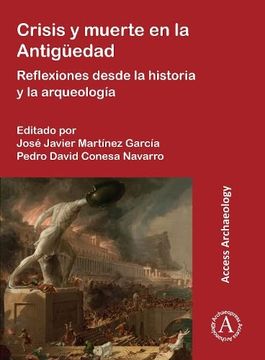
Crisis Y Muerte En La Antiguedad: Reflexiones Desde La Historia Y La Arqueologia (in Spanish) - Martinez Garcia, Jose Javier ; Conesa Navarro, Pedro David
New Book
Imported
to Canada
*
Delivery: 17 Mar - 26 Mar
Shipping: 6 to 8 business days.
C$ 106.43
* Import costs and 5% GST included in the price ✅
C$ 106.43
Delivery to any Canada address between Tuesday, March 17 and Thursday, March 26
Shipping
Origin: U.S.A.
Import costs included in the price ✅
Delivery to any Canada address between Tuesday, March 17 and Thursday, March 26.
Choose the list to add your product or create one New List
Crisis Y Muerte En La Antiguedad: Reflexiones Desde La Historia Y La Arqueologia (in Spanish)
Martinez Garcia, Jose Javier ; Conesa Navarro, Pedro David
Synopsis "Crisis Y Muerte En La Antiguedad: Reflexiones Desde La Historia Y La Arqueologia (in Spanish)"
Crisis y muerte en la Antiguedad takes a multidisciplinary and international perspective to analyse periods of crisis in the Ancient World from a historical and archaeological point of view. To this end, the contributors have focused on periods of health and environmental crises, as well as persecutions and periods of famine and starvation during antiquity. The first two articles analyse these issues from a global perspective, providing an introductory framework for the volume. The following contributions not only study specific areas such as the Lower Guadalquivir region (Andalusia) or Tierras de Barros (Extremadura) in the Iberian Peninsula, but also other emblematic historical sites such as the city of Oxyrhynchus, Egypt. Martyrdom and the persecution of people of the Christian faith forms another focus, and despite being widely treated by contemporary historiography, new data is provided through the philological and historical analysis of authors such as Orosius, Lactantius, Prudentius and Augustine of Hippo, and through case studies of episodes during the reigns of Septimius Severus, Caracalla and Theodosius. The volume ends with a key theme, the so-called Plague of Justinian. From an archaeological perspective, and centred on the Iberian Peninsula, it offers a concrete overview that complements the information transmitted by classical authors on a phenomenon that occurred throughout the late Roman Empire.