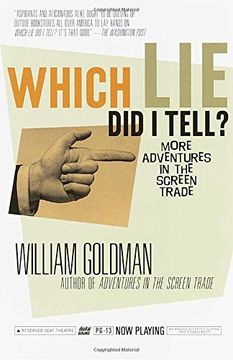
Which lie did i Tell? More Adventures in the Screen Trade (Vintage)
William Goldman
Synopsis "Which lie did i Tell? More Adventures in the Screen Trade (Vintage) "
From the Oscar-winning screenwriter of All the President's Men, The Princess Bride, and Butch Cassidy and the Sundance Kid, here is essential reading for both the aspiring screenwriter and anyone who loves going to the movies. If you want to know why a no-name like Kathy Bates was cast in Misery, it's in here. Or why Linda Hunt's brilliant work in Maverick didn't make the final cut, William Goldman gives you the straight truth. Why Clint Eastwood loves working with Gene Hackman and how MTV has changed movies for the worse, William Goldman, one of the most successful screenwriters in Hollywood today, tells all he knows. Devastatingly eye-opening and endlessly entertaining, Which Lie Did I Tell? is indispensable reading for anyone even slightly intrigued by the process of how a movie gets made.
William Goldman nació en Highland Park, Illinois (Estados Unidos) el 12 de agosto de 1931. Se estrenó como novelista en 1957 con "The Temple of Gold", y se hizo famoso con "La princesa prometida", que llevó a la pantalla el director de cine Rob Reiner. Firmó novelas con dos pseudónimos, Harry Longbaugh (con el que firmó "No Way To Treat a Lady") y Simon Morguestern (con el que firmó "La Princesa Prometida" y "Los gondoleros silenciosos". En el mundo cinematográfico se hizo muy popular con algunos de sus guiones, como los de las películas "Butch Cassidy and the Sundace Kid (Dos hombres y un destino) con el que ganó su primer premio Óscar, "Todos los hombres del presidente" (su segundo Óscar), "Maraton man", "La princesa prometida", "Misery" (adaptación de una novela de Stephen King), "Memorias de un hombre invisible", "El año del cometa", "Chaplin", "Maverick" o "El indomable Will Hunting". En la actualidad vive en Manhattan, Nueva York (EE.UU).